Alternative names:
Neocaridina Davidi var. Orange Extreme
Description:
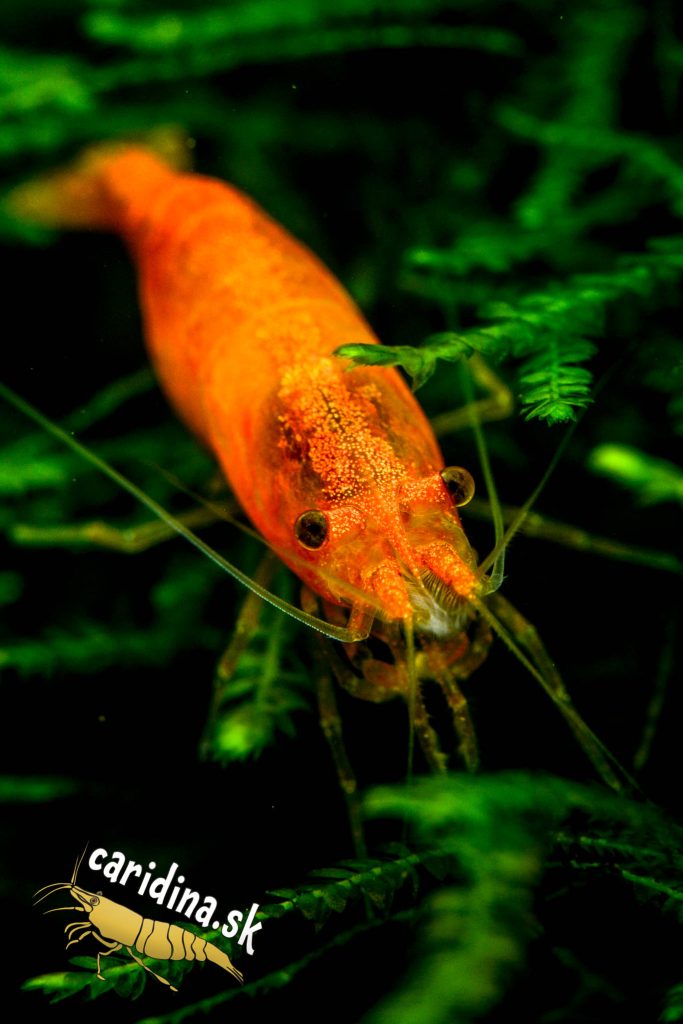
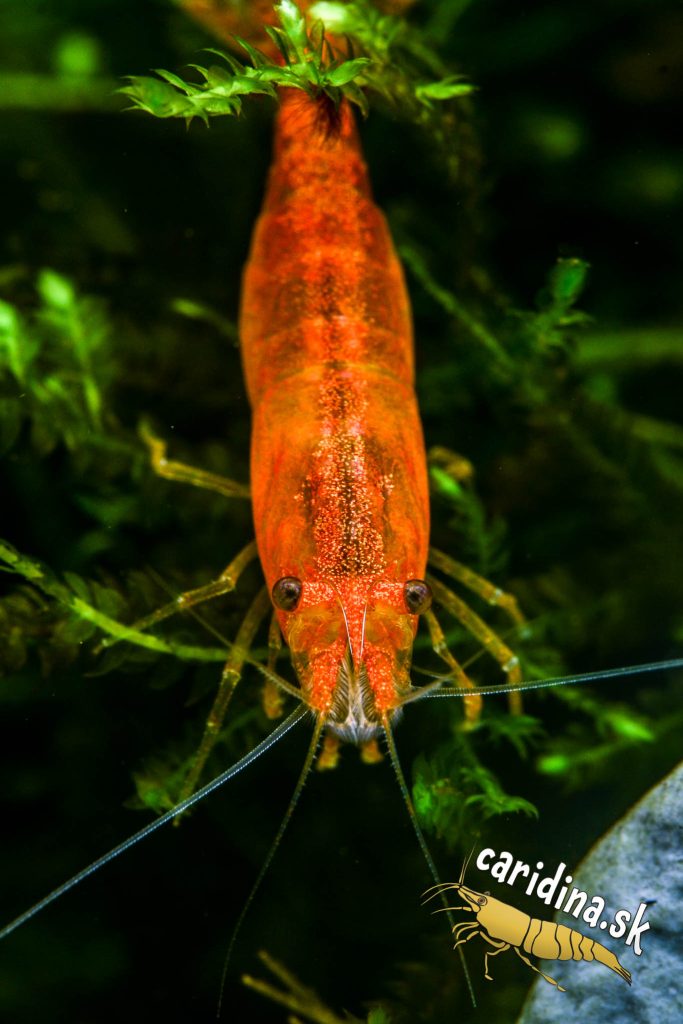
Neocaridina davidi “Orange Extreme” is a variation of cherry shrimp known for its intense and vibrant orange coloration. These shrimp typically have a solid and bright orange hue throughout their bodies, often with a striking saturation that makes them stand out in freshwater aquariums. Neocaridina davidi “Orange Extreme” shrimp may also exhibit a translucent or semi-translucent quality, particularly in certain areas such as the legs and antennae. Additionally, they may display variations in color intensity and patterns, with some individuals having darker orange markings or speckles. Overall, they are prized for their bold and eye-catching appearance, making them popular choices for aquarists seeking vivid and striking additions to their tanks.
In general, shrimps of the genus Neocaridina are suitable even for complete beginners, the condition is a well-established tank, planted with plants and moss. It is an undemanding shrimp that can tolerate a wide spectrum of water chemistry. Recommended aquarium size, min. 10 liters, ideally 30 liters and more. Recommended starting breeding group of 10 to 20 pcs. Breeding in groups has proven itself. They grow up to 3 cm. As for the temperature, Neocaridina shrimps tolerate temperatures from 18-28 degrees °C, even short-term temperatures below 10 degrees °C.
Temperament:
Peaceful
Size:
2 – 3 cm
Water parameters:
- Temperature: 72-78°F (22-26°C). Maintaining a stable temperature within this range is crucial for breeding.
- pH: 6.5-7.5. Neocaridina shrimp prefer slightly alkaline to neutral water.
- GH (General Hardness): 6-10 dGH.
- KH (Carbonate Hardness): 3-8 dKH.
- Ammonia and nitrite levels should be kept at 0 ppm, while nitrate levels should be kept low, preferably below 20 ppm.
Feedind:
- Offer a varied diet consisting of high-quality shrimp foods, algae wafers, blanched vegetables (such as spinach, zucchini, or cucumber), and occasionally, small amounts of protein-rich foods like fish or shrimp pellets.
- Supplement their diet with biofilm, which naturally grows on surfaces within the aquarium.
Notes: